CHARGING
Light goes in
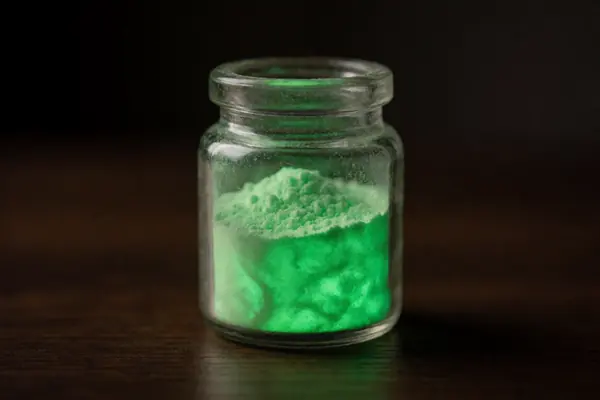
The material is excited with high-energy light, typically ultraviolet, though other energy such as beta rays can also do it.
Compare the glow cadglow
Start
THE SCIENCE OF AFTERGLOW
A glow-in-the-dark star is a tiny battery for light.
Shine light on it and some of the energy gets stuck in defects in its crystals. In the dark, warmth shakes that energy loose a little at a time, and the material keeps glowing long after the lamp goes off.
CHARGEthen wait for dark
Compare the glowKeep in mind
THE SHORT ANSWER
Scientists call it persistent luminescence, afterglow or phosphorescence.
The secret is in deliberate flaws in the crystal.
CHARGING
The material is excited with high-energy light, typically ultraviolet, though other energy such as beta rays can also do it.
Compare the glowTRAPS
Defects in the crystal trap charge carriers. Warmth releases them slowly, so the glow lasts minutes, hours or even days instead of milliseconds.
Why it fadesUSES
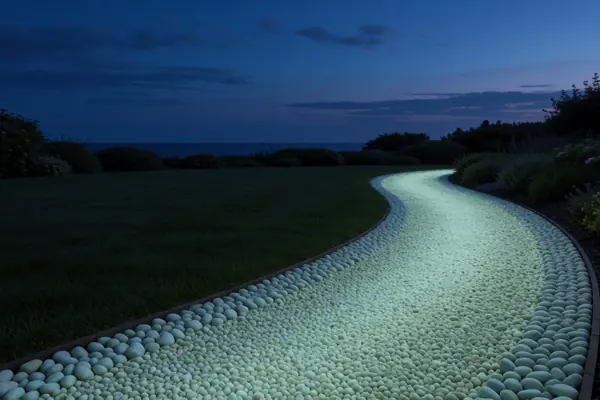
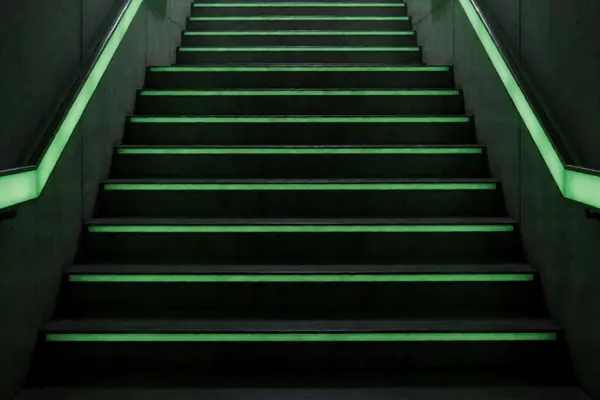
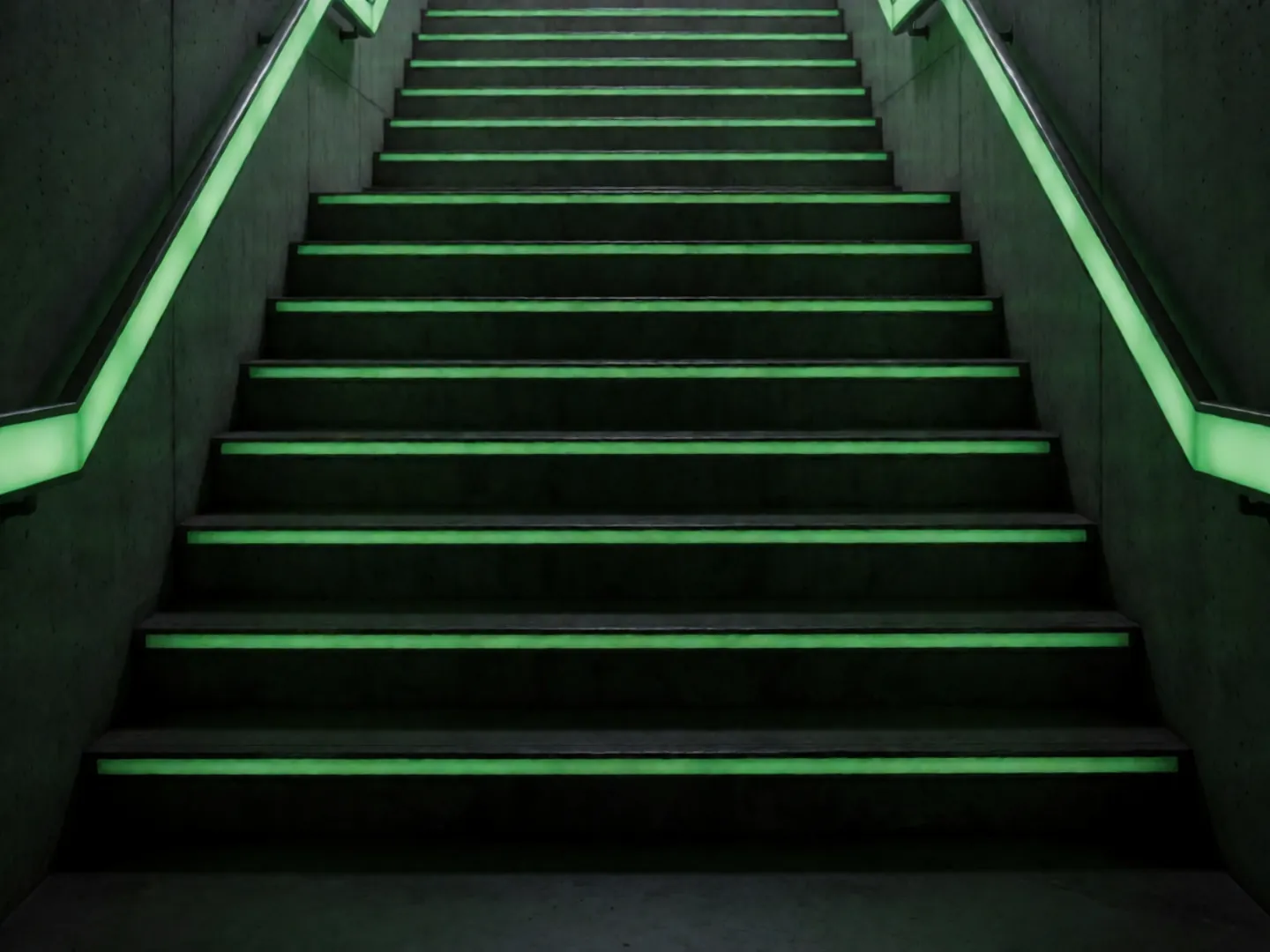
Ghent University's LumiLab says persistent luminescence is widely used in glow-in-the-dark features and non-electrical safety signage.
See the numbersHOW LONG DOES IT GLOW?
Choose a luminescent material to see how long its light lingers after the lamp goes off. The bar shows how long the afterglow lasts.
Figures from a 2010 review of persistent luminescence by Ghent University researchers and LumiLab's research overview.
TWO NUMBERS WORTH KNOWING
One figure from the 1996 breakthrough,
one from its brighter blue cousin.
10+× brighter
Strontium aluminate versus zinc sulfide
In 1996, researchers reported strontium aluminate with europium and dysprosium glowing more than ten times brighter than the zinc sulfide used before, and for much longer.
BRIGHTNESS · 1996 DISCOVERY
20+ hours
How long one blue-glowing aluminate stays visible
A related strontium aluminate, Sr4Al14O25 with europium and dysprosium, glows blue around 490 nm and remains visible for over 20 hours.
DURATION · BLUE ALUMINATE
Persistent luminescence has a long history: the review dates the first scientific description to 1602, when a glowing stone was found near Bologna, probably caused by barium sulfide.
FOUR THINGS THAT HELP
These follow from how persistent phosphors work. None needs anything more than a lamp and a little patience.
Step 1
These materials are excited by high-energy light, typically ultraviolet, so daylight or a bright lamp charges them better than dim room light.
Step 2
Afterglow is measured against the sensitivity of the dark-adapted eye. A faint glow becomes easier to see once your eyes adjust.
Step 3
The trapped charge leaks out over time, so the glow is brightest just after charging and dims gradually.
Step 4
Warmth releases the trapped charges, so temperature changes how the afterglow behaves.
WHY IT FADES
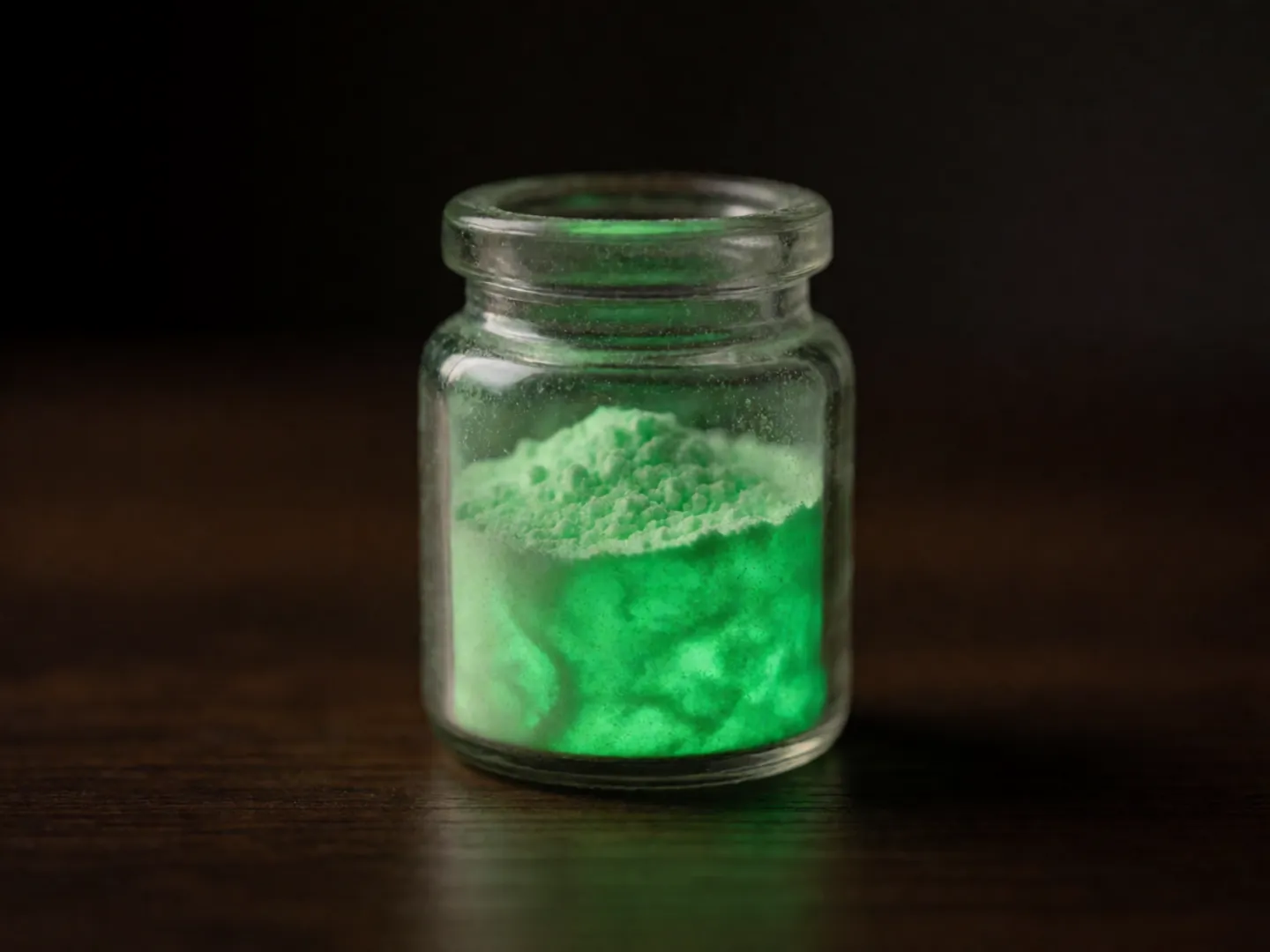
Researchers agree on the general picture: long-lived traps hold the stored energy, and heat releases it bit by bit. A 2023 study from North Dakota State University found that dysprosium defects are much better at trapping electrons than the strontium ions sitting in the wrong places in the crystal.
To compare materials fairly, the Ghent review counts the afterglow as over when its brightness falls below 0.32 mcd/m², roughly 100 times the sensitivity of the dark-adapted human eye. Older zinc sulfide powders sometimes had radioactive promethium or tritium added to boost their glow.
Questions
The material absorbs light, typically ultraviolet, and some of the energy is caught in traps formed by defects in its crystals. Warmth releases the trapped charges slowly, and each release gives off a little light.
The best-known modern material, strontium aluminate with europium, emits green light. Some related materials glow blue, such as Sr4Al14O25, which emits around 490 nm.
Ordinary luminescence stops within micro- or milliseconds of the light going off. Persistent luminescence, the glow-in-the-dark kind, lasts minutes to hours because energy is stored in traps.
In 1996 Japanese researchers reported strontium aluminate co-doped with europium and dysprosium, which glowed for hours and more than ten times brighter than earlier zinc sulfide.
No. A 2010 review notes that the first scientific description dates to 1602, when a glowing stone was found near Bologna, and describes older accounts of paintings that stayed visible at night.
Destination
Updated
ABOUT THIS NAME
cadglow.com is part of the DoodleSale portfolio. It isn't in an auction right now, but you can ask about leasing it.